
Digital Society and Circular Economy Objectives
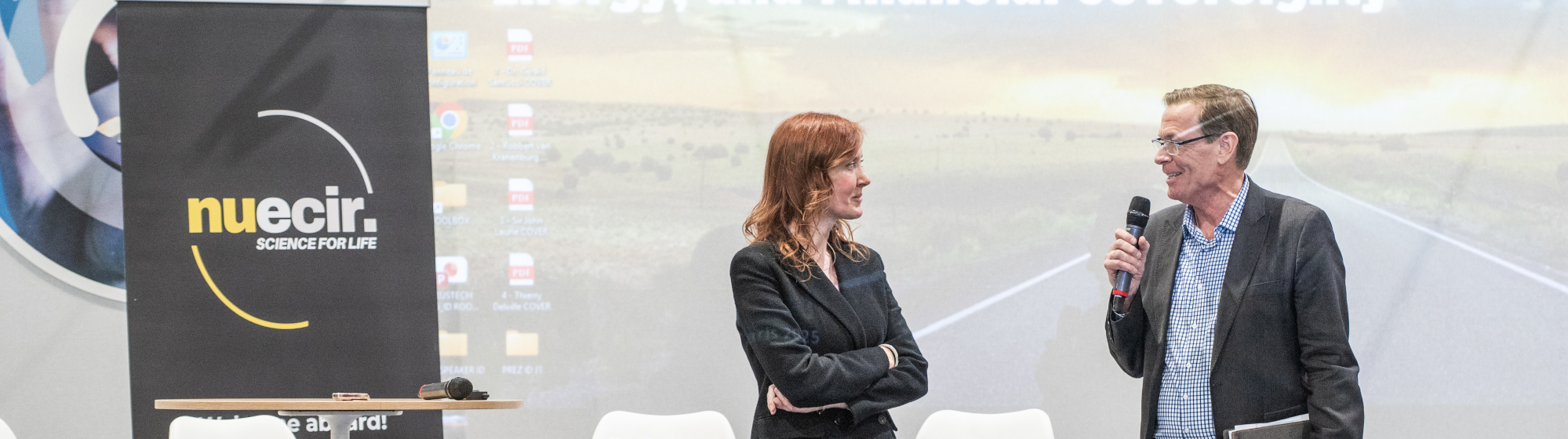
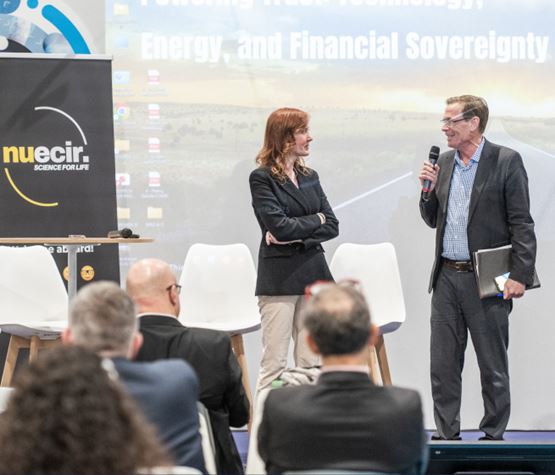
It was in this context that the Nuecir session: “Will the Digital Society Achieve Its Circular Economy Objectives?” took place on 2 December 2025 in Paris, during the TRUSTECH exhibition.
Moderated by Sophie BOYER DE LA GIRODAY (Wise Media), this round table discussion closed the first day of conferences in the ID room. It brought together Sir John LAURIE, Gérald SANTUCCI, Rob VAN KRANENBURG and Thierry DELVILLE to analyse the conditions required to reconcile digital transition, environmental sustainability and infrastructure resilience, in a context of rapid technological acceleration.
The Circular Economy for a Sustainable Development
The global economic system is largely based on a model of mass production and consumption. Natural raw materials are first extracted, then transformed into finished products, consumed across the world, and ultimately discarded as waste. The negative consequences are numerous: climate change, biodiversity loss and a decline in public health.
The circular economy aims precisely to address these challenges by limiting waste production, reducing wastefulness and promoting the sustainable use of natural resources. This notably involves implementing an ecological transition through smarter product design and more responsible consumption.
A Digital Society Confronted with Energy Reality
The discussions immediately highlighted a point of convergence: the digital society relies on energy infrastructures whose demands are increasing rapidly. Sir John LAURIE, President of Progrès Nucléaire, recalled that digital technologies data centres, artificial intelligence, connected devices require continuous and reliable electricity supply.
“There is no digital society without stable energy, and this issue is often absent from sustainability debates,” he emphasised. According to him, while renewable energies play an essential role in the energy transition, they alone are not sufficient to guarantee the stability required by critical infrastructures operating 24 hours a day. Nuclear power therefore appears as a structuring component of a low-carbon energy mix capable of sustainably supporting digital growth.
This approach echoed the remarks of Gérald SANTUCCI, President of ENSA, who stressed the need to align digital ambitions with physical realities. “The digital transition cannot be considered independently of the energy question,” he recalled.
Rob VAN KRANENBURG complemented this analysis by underlining that data has become an invisible but essential infrastructure. The exponential increase in data flows implies a comprehensive reflection on their environmental impact, at the risk of compromising the very sustainability objectives pursued by the digital society.
Digital Technology and the Circular Economy: A Systemic Transformation
Beyond energy, the round table questioned the capacity of digital technology to fit within a circular economy logic. Gérald SANTUCCI argued for a profound transformation of economic models, considering that technological efficiency alone is no longer sufficient. “We must move from a logic of impact reduction to a logic of positive contribution,” he explained, referring to the concept of the Nature Positive Economy.
From this perspective, digital technology can become a lever for circularity if it is used to optimise resources, extend equipment lifespan and improve traceability. Rob VAN KRANENBURG notably highlighted the role of IoT technologies in intelligent asset management, predictive maintenance and the reduction of industrial waste. Applied on a large scale, these technologies make it possible to better measure, anticipate and manage the environmental impacts of digital systems.
However, the speakers stressed that this approach requires clear governance of data and infrastructures. Circularity cannot be achieved without a systemic vision integrating design, usage, security and end-of-life management of technologies. Failing this, digital technology risks reproducing linear models that are incompatible with the stated environmental objectives.
A Strategic Meeting Point for Decision-Makers
The issue of security emerged as a cross-cutting element of the discussions. Thierry DELVILLE, Group Security Director at Capgemini, recalled that the digital society relies on critical infrastructures whose protection determines the overall resilience of systems. “Sustainability also depends on the ability to secure infrastructures over the long term,” he stated.
The increase in the number of connected devices, platforms and data flows expands the attack surface and reinforces the need to integrate security from the design stage.
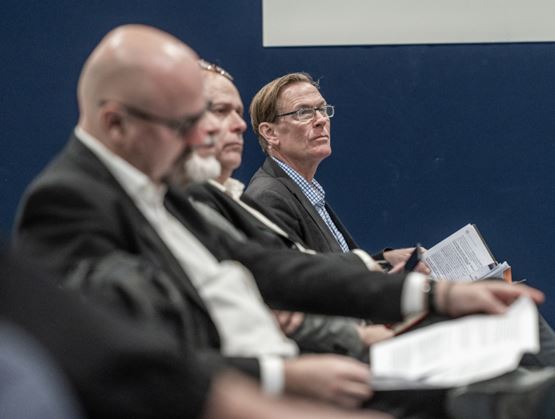
This requirement echoes the concerns expressed by Rob VAN KRANENBURG regarding the concentration of digital and energy capacities, which raises issues of sovereignty and strategic dependence. The discussions also highlighted the importance of strengthened cooperation between public and private actors, as well as the key role of training and skills.
Building a digital society compatible with the circular economy implies a careful articulation between technological innovation, regulation, security and social acceptability.
The question of whether the digital society will achieve its circular economy objectives goes far beyond the technological sphere. The discussions showed that this ambition depends on structuring choices in terms of energy, governance and economic models. Between performance requirements, environmental imperatives and sovereignty issues, digital technology cannot be sustainable without a systemic and coordinated approach. At a time when digital infrastructures are becoming essential to the functioning of modern societies, the ability to reconcile innovation and sustainability appears as one of the major challenges of the coming years.