
Interview Lindsay MARTIN-NEZ from HID
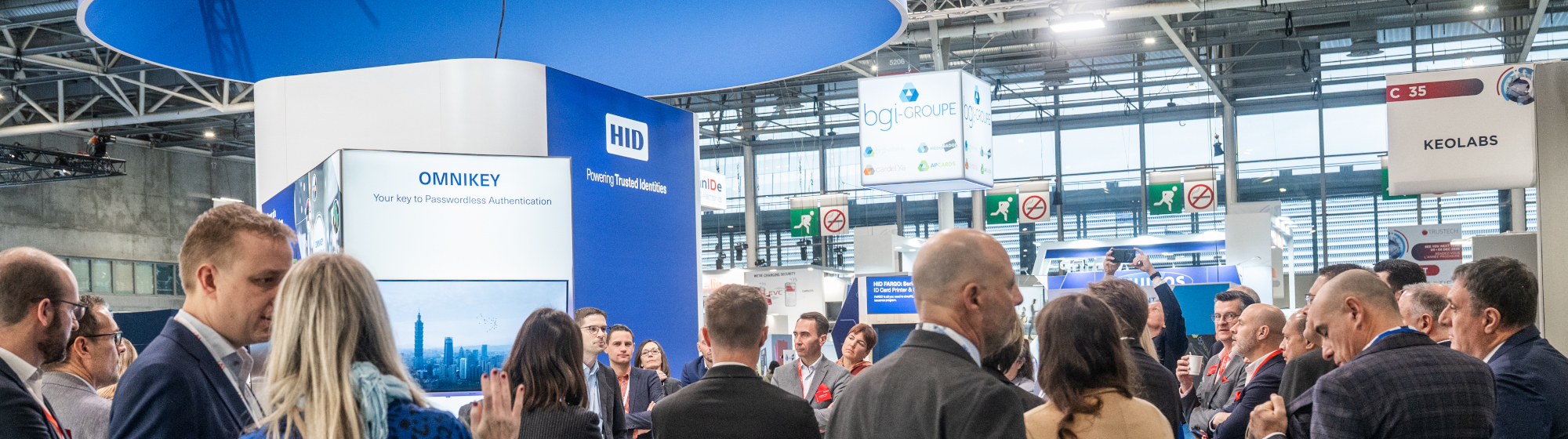
The Value of Connecting at TRUSTECH
TRUSTECH brings together the entire identity and payments ecosystem under one roof. From HID's perspective, what makes these face-to-face discussions with customers, partners and industry peers so valuable in such a fast-moving market?
This is actually my first year at TRUSTECH, and I'm genuinely excited about it. I've been in this industry for many years, and I've heard about TRUSTECH from peers as the one event where the entire identity, payments, and security world shows up in the same building at the same time.
What draws me in is the mix. In one day, I might sit across from an HR director trying to figure out onboarding for a distributed workforce, then turn around and talk to a corporation balancing school safety with budget constraints, then end up in a conversation with a channel partner about deployment logistics I hadn't even considered. That range doesn't happen over email or on a scheduled call. It happens because everyone's in the same place at the same time.
I’m especially looking forward to conversations that go beyond the physical vs mobile debate. What I want to hear is how organizations, schools, hospitals, financial institutions, are building programs where physical and mobile credentials work together.
And selfishly, as someone new to this event, I'm looking forward to just being present. Reading the room, meeting the people whose names I've only seen on panels or in trade publications, and understanding firsthand why so many people in this industry treat TRUSTECH as a must-attend rather than a nice-to-have. I'd rather learn that in person than take anyone else's word for it.
Join Lindsay MARTIN-NEZ in the TRUSTECH ID Room:
- Tuesday 2 December, 10:30 - 11:00, Most Credential Programs Happen by Default. The Best Ones Are Built with Intention
- Wednesday 3 December, 10:30 - 11:00, The Physical-Digital Identity Problem Nobody Is Talking About
 Lindsay MARTIN-NEZ will take the TRUSTECH stage on Tuesday 1st and Wednesday 2nd of December
A Changing Identity Landscape
As digital identity continues to evolve, organizations are facing growing expectations around security, convenience and trust. From your perspective, what are the biggest shifts shaping the market today, and how should organizations respond?
The biggest shift I'm seeing is that identity has stopped being purely a security function and started being a trust function, and those are not the same thing. Security asks, "can this person get in." Trust is more focused on, "does this person belong here." Organizations that only optimize for the first question are going to keep losing on employee experience, visitor experience, and honestly, brand perception, even if their access control system is flawless.
Convenience is pushing everything toward mobile, and I think that discussion is good. Mobile credentials solve real problems: provisioning speed, remote onboarding, the ability to issue and revoke access instantly. But convenience and trust don't always move in the same direction. A badge you can see, hold, and wear communicates something a phone in someone's pocket doesn't. It's visible to a colleague walking past you in the hallway. It's a physical signal that says "I belong here" before a single word is exchanged. Organizations that treat this as an either-or decision are missing the point. The ones getting it right are building programs where physical and mobile credentials each do what they're best at, instead of forcing one technology to solve every use case.
The other shift is generational and it's happening faster than most security teams have adjusted for. Younger employees expect frictionless, app-based experiences by default, and they also crave physical symbols of identity and belonging in ways that surprise people. Think about how much effort Gen Z puts into physical badges for concerts, conferences, even gaming events. That instinct doesn't disappear at the office door. My advice to organizations is simple: don't design your identity strategy around what's technologically possible. Design it around what actually makes people feel secure, recognized, and connected to the place they work or learn.
Preparing for What's Next
Looking ahead, which emerging trend or technology do you believe will have the greatest impact on the future of trusted identity, and why should the industry start preparing for it now?
The trend I'd point to isn't a single technology. It's the maturing of coexistence itself. The recognition that physical and mobile credentials aren't competing paths but two halves of the same identity strategy, and the organizations that figure out how to run both well are going to have a real advantage over the ones still treating this as an eventual replacement story.
For years, the industry narrative was "mobile will eventually replace the badge." I've never believed that, and the data increasingly backs me up. What's happening is more interesting: organizations are realizing that a badge and a phone credential serve different psychological and functional needs and forcing a single-technology mandate creates gaps. Visitors need something physical to hold. New hires want a tangible object on day one that says, "you're one of us now," something a push notification can't replicate. Meanwhile, IT and security teams want the flexibility, instant provisioning, and reduced physical inventory that mobile offers. The future isn't picking a side. It's building infrastructure, from readers to issuance systems to policy.
The reason the industry needs to prepare now rather than later is that most legacy systems were built assuming one technology would win. Badging software, access control systems, HR onboarding workflows… a lot of those technically still assume a single credential type per employee. Organizations that wait until mobile adoption forces the issue will be retrofitting under pressure. The ones building coexistence into their infrastructure today and treating the badge and the mobile credential as complementary from the start, are the ones who'll move fastest when expectations shift again, because they will. Identity never sits still for long.